

CLARIFY COLLECTION
BREAKOUTS + CONGESTION
Most people fight oily, congested skin by stripping it — and the skin responds by producing more oil.The counterintuitive truth: hydration reduces oil production.A skin that has enough water stops compensating with sebum. And oil, applied correctly, clears oil. This collection works with the skin's own logic, not against it.
Congestion - the ongoing condition, upstream
Breakouts - the event, when the queue overflows
THE COLLECTION -
Clear the queue.The breakouts follow.
THE COUNTERINTUITIVE TRUTH
Stripping oily skin makes it oilier. Hydrating it makes it less.
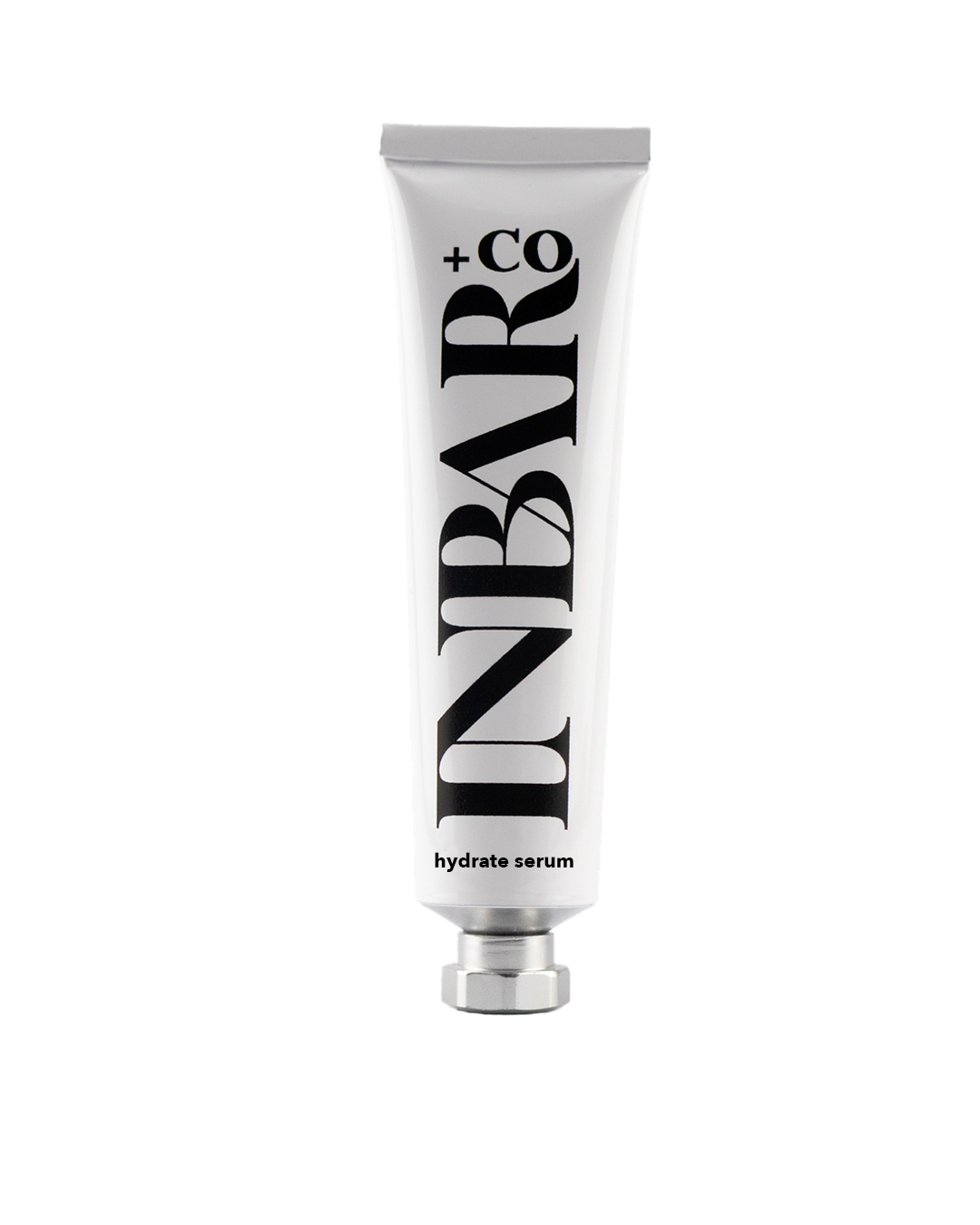
When the skin lacks water, it compensates with sebum. Hydrate Serum before Clarify Serum is not optional in the AM - it is what tells the skin to stop overproducing, and what prevents the niacinamide from blooming on the surface.






PROTOCOLS & KITS
Start with two products. Add from there.
Congestion is managed with consistency, not complexity. The smallest kit in this collection — two products — addresses the most common cause of persistent breakouts. The fuller routines are for when the skin is ready for more, not before.
One way to think about it
"A pore is not a problem. It is infrastructure. Like any infrastructure, it works without incident until the throughput exceeds the capacity - dead cells that haven't left, sebum that hasn't cleared, a barrier that's been stripped and is now overproducing oil to compensate. Congestion is a traffic jam, not a condition. Breakouts are what happen when the jam has become gridlock. This collection manages the traffic. The breakouts resolve themselves."
The AM layering order - Clarify Serum without bloom
LIGHTEST TO RICHEST ALWAYS
1
CLEANSE
Gentle Cleanser
Without stripping. Room temperature water preferred.
2.
HYDRATE FIRST
Hydrate Serum
The moisture base. Prevents niacinamide bloom. Tells skin to stop overproducing oil.
3.
SEAL
Recovery Cream
Soothes and lock. Always last. Makes the actives underneath it absorb rather than evaporate.
4.
PROTECT
Shield Primer SPF 35
SPF prevents post-breakout hyperpigmentation — the marks that outlast the event.
GOING FURTHER
Adding Renew PM - the upstream intrevention
Renew PM addresses congestion at the cellular level, where the other formulas in this collection cannot reach: by accelerating cell turnover so that the dead cells contributing to follicle blockages move through the queue faster, and by normalising sebaceous activity over time. It is slower to start and more demanding to introduce — but the structural improvement it produces compounds in a way that topical niacinamide and BHAs alone do not.
Introduce it only after four consistent weeks on the Core Four. The skin needs an established routine and a functioning barrier before retinaldehyde is layered in. Do not combine with the Radiance Mask on the same evening — always on alternate nights.
01
WEEKS 1-4
Establish the foundation
The Core Four Only - Cleanse, hydrate, Clarify, Recovery Cream. Morning and evening, without variation. The barrier needs four weeks of consistency before anything more is introduced. Do not add Renew PM before this.
02
WEEKS 5-12
Introduce Renew PM slowly
Begin every other evening. Apply in circular motions over Hydrate Serum — do not rub in. Seal with Recovery Cream. If dryness or sensitivity appears, reduce frequency and allow the skin to adjust. Never on the same night as the Radiance Mask. Build toward nightly use over eight weeks.
03
WEEK 8 ONWARD
The system at full capacity
Daily Core Four in the AM. Renew PM on most evenings. Radiance Mask once weekly on an alternating night. The three mechanisms — daily niacinamide regulation, weekly BHA clearance, and ongoing retinal renewal — are now working at different depths simultaneously. The results compound from here.
Breakouts and congestion — and why the standard approach makes both worse
The Science behind the Collection
The pore,
the queue, and the jam
A breakout is not a sudden event. It is the end result of a sequence that started two to four weeks earlier — a follicle filling with dead skin cells and sebum, a slow narrowing of the opening, and eventually a blockage that created the conditions for bacterial activity and inflammation. The spot treatment applied on day one of a visible breakout is arriving four weeks after the cause.
The standard response to oily, congested skin — strip it, dry it, fight the sebum — worsens both conditions. A stripped barrier produces more oil to compensate. A dehydrated skin reads the water deficit as a survival signal and compounds the sebum production further. The correct response is the counterintuitive one: hydrate first, and let the barrier regulate itself.
ACongestion is the ongoing upstream condition — the chronic accumulation of dead skin cells and sebum within the follicle that precedes every breakout. It is visible as enlarged pores, persistently uneven texture, and a surface that catches light unevenly because of the raised material blocking each opening.
The primary drivers are: insufficient cell turnover (the queue slows), excess sebum (the volume increases), dehydration (the skin overproduces oil to compensate for water loss), and stripping cleansers (which trigger compensatory oil production that worsens all three). Congestion is managed — consistently, over weeks — not cleared in a single session.
- Enlarged pores, particularly on the nose, chin, and forehead — the highest-traffic areas
- Dull or bumpy texture even without active breakouts — the backed-up queue at rest
- Blackheads and whiteheads that return consistently in the same locations
- A shiny surface that returns within hours of cleansing — oil overproduction in response to stripping
- Skin that feels simultaneously oily and tight — the dehydration-overcompensation cycle in progress
A breakout is congestion advanced to its conclusion: a blocked follicle creates an anaerobic environment where C. acnes bacteria, which normally coexist harmlessly with skin, proliferate and trigger an immune response. The inflammation, redness, and papule or pustule are the skin's immune system doing its job — under conditions it was not designed to sustain.
Treating the event directly — with drying spot treatments or aggressive exfoliation — addresses only the visible result while often worsening the underlying conditions. Post-inflammatory hyperpigmentation, the dark marks that follow a breakout, are frequently more persistent than the breakout itself. SPF every morning prevents their formation.
- Papules and pustules returning in the same locations — the infrastructure is still congested
- Breakouts appearing two to four weeks after a period of stress, diet change, or routine disruption
- Post-inflammatory hyperpigmentation — the marks that outlast the event itself
- Cystic breakouts that don't surface — deep follicle blockages below the clearance reach of surface exfoliants
- Breakouts that worsen after new products — barrier disruption creating ingress for bacterial activity
COMMON TRIGGERS
.
.
.
.
.